Re-Remembering War
1. Re-Remembering War.
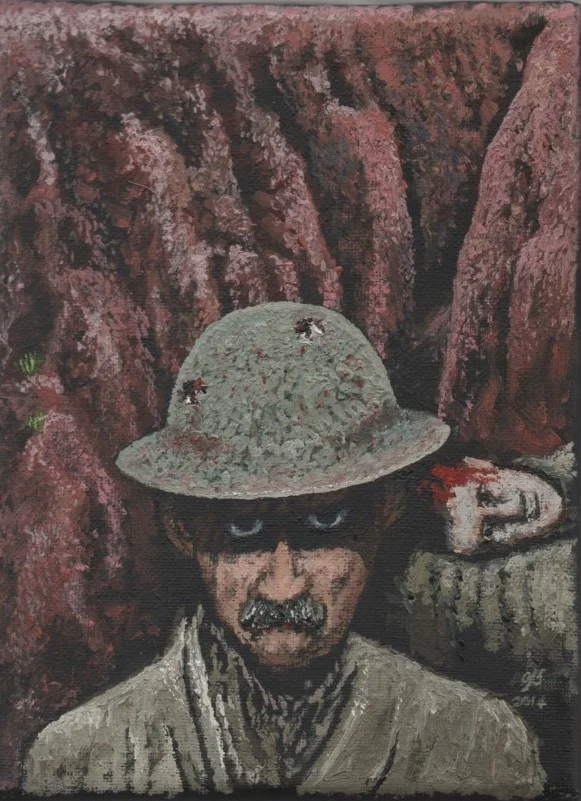
We are coming up to Remembrance Day, but this year it must be different. Usually, it is frozen in a sacred, silent respect for the dead and an implicit, always unchallenged, understanding that they died for a good cause. Actually, they always did not, as this man in the painting knew. Respect for them should be different. They were let down by war after war that should not have been. We look at these failures and honour those who died, and still die needlessly, by facing the real cause of wars and rumours of wars. Let us shake off this propaganda control by the militarists and honour the dead by facing the truths about war. We begin with a general point and the example of WW1.
1. WORLD WAR ONE. The Military-Industrial Complexes of the World need wars and generate wars. Accumulating arms causes wars and did in 1914.
Most modern wars do not have a big disputed reason, but start because the military and the arms sellers need wars for their business. The military-industrial complex, allied to its politicians, cause wars and rumours of wars.
Why was the Great War triggered by a single murder in Sarajevo? Because there were already four massive arms races underway. The GREAT WAR WAS ABOUT ARMS. This was hidden in the long remembrance of the World War One. We discussed it endlessly, but not its cause.
The person who knew the build up to World War One most thoroughly was Lord Grey, British Foreign Secretary for the preceding decade. He said: “The moral is obvious; it is that great armaments lead inevitably to war. If there are armaments on one side, there must be armaments on other sides.. The increase in armaments that in each nation is intended to produce consciousness of strength and a sense of security, do not produce these effects. On the contrary, it produces a consciousness of the strength of other nations and a sense of fear. Fear begets suspicion and distrust and evil imaginings of all sorts…The enormous growth of armaments in Europe, the sense of insecurity and fear caused by them – it was these that made war inevitable. This, it seems to me, is the truest reading of history, and the lesson that the present should be learning from the last in the interests of future peace, the warning to be handed on to those who come after us.”
There were many other witnesses to the same truth, as we shall see. ARMS CAUSE WARS.
Is Lord Grey correct? Your answer counts.